
Travel guide
Before you go to Galápagos.
The things worth knowing before you fly and once you land, in the order you will need them. Nothing here is about booking; that is in the help center.
Read this if nothing else
- PassportValid six months past your trip. Bring it on every tour: the coast guard list names every passenger.
- Return ticketRequired at check-in on the mainland. Stays are limited to 60 days.
- Transit Control CardThe TCT, bought online before you fly, $20 per person, children included. You show it on arrival and on departure.
- Park fee in cashPaid at the island airport, cash only, $200 for most foreign adults. The table in chapter 2 has every category.
- Nothing fresh in the luggageBags are inspected for fruit, seeds, plants and animal products before the flight. Leave them on the mainland.
- Popular days fill upThe best boat days and the ferries sell out two to four weeks ahead in high season. Book those first, the rest can wait.
Chapter 1
Entry fees and documents
What you pay to enter, who pays what, and the two documents you cannot fly without.
Every visitor pays the Galápagos National Park entry fee on arrival at the island airport, in cash, US dollars. The tariff depends on nationality and age. Keep the receipt: it is checked at some visitor sites and on the ferries.
| Visitor | Park entry fee |
|---|---|
| Foreign tourist | $200 |
| Foreign tourist under 12 | $100 |
| CAN or Mercosur national | $100 |
| CAN or Mercosur, under 12 | $50 |
| Foreign student at an Ecuadorian institution | $50 |
| Ecuadorian, or foreign resident in Ecuador | $30 |
| Ecuadorian or resident, under 12 or over 65 | $15 |
| Children under 2 | Free |
CAN and Mercosur here means Bolivia, Colombia, Peru, Argentina, Brazil, Paraguay and Uruguay. Official tariff since 1 August 2024.
- Transit Control Card (TCT)
- $20 per person
- Bought online before the flight, for every traveller including children. Shown at the mainland airport, on arrival and on departure.
- Passport
- 6 months valid
- Bring the passport itself, not a copy: tour boats file a passenger list with the coast guard.
- Return ticket
- Max. 60 days
- Checked when you board on the mainland.
- Luggage inspection
- Before the flight
- The biosecurity agency checks bags at Quito and Guayaquil for fresh food, seeds, plants and animal products. None may enter.
Facts in this chapter checked on Sep 12, 2026.
Chapter 2
Arriving
Two airports, and how you get from each to your hotel.
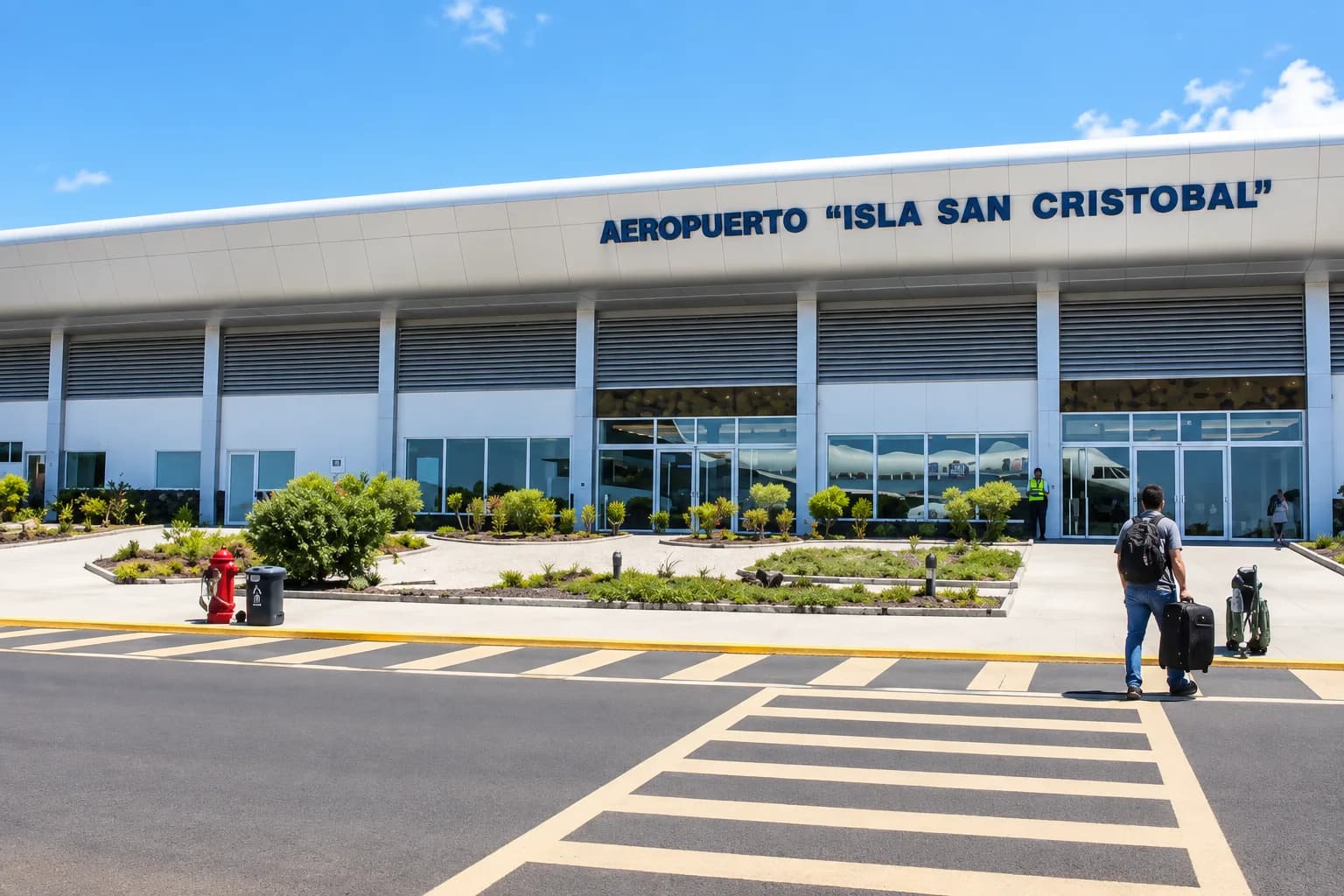
All flights come from Quito or Guayaquil and land at Baltra, the gateway to Santa Cruz, or at San Cristóbal. Many people fly into one and out of the other, which saves a ferry crossing.
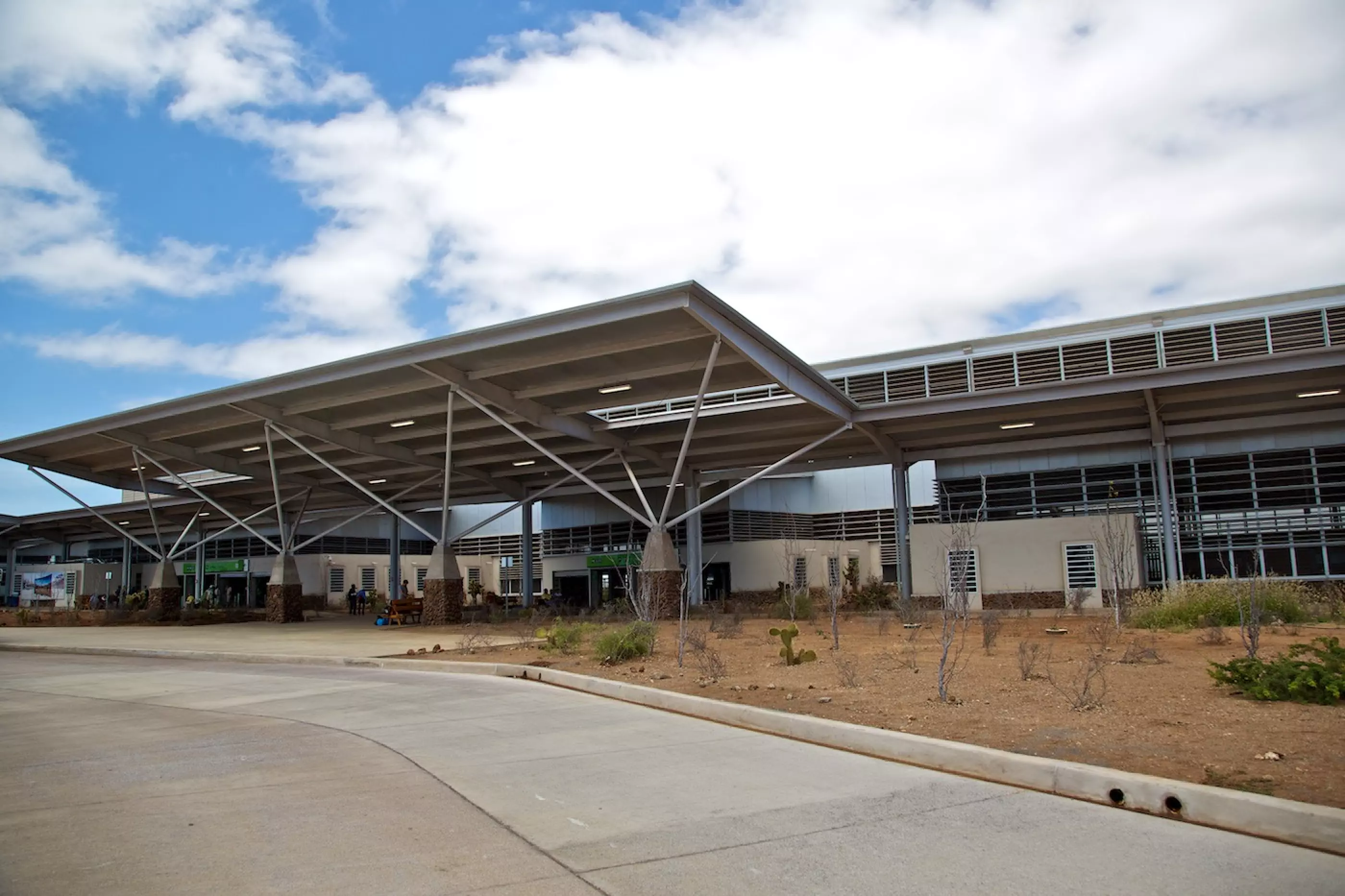
From Baltra airport to Puerto Ayora
- 1
The airport bus
Outside the terminal a bus takes you to the Itabaca Channel in about ten minutes. Around $5, luggage included.
- 2
The channel ferry
A small ferry crosses to Santa Cruz in five minutes, $1 per person.
- 3
Over the highlands to Puerto Ayora
On the other side a taxi takes you to your hotel in about forty minutes, roughly $25 for the car; the public bus is a few dollars per person and drops you in town. A private transfer does the whole chain door to door, and some include a stop at the giant tortoises on the way.
From San Cristóbal airport to Puerto Baquerizo Moreno
- 1
A taxi at the door
The airport is on the edge of town, so there is no bus and no ferry: white pickup taxis wait outside the terminal.
- 2
Ten minutes to any hotel
A few dollars for the car, luggage in the back. A private transfer meets you with your name if you would rather not haggle after a flight.
Facts in this chapter checked on Sep 12, 2026.
Chapter 3
Getting around
Ferries between the islands, taxis and water taxis on them, and where a bike is the better idea.
There are no rental cars and no flights you would want between the inhabited islands. You move by speedboat between them and by pickup taxi, on foot or by bike on them.
- Inter-island ferries
- About 2 hours, from $30
- Speedboats for 20 to 30 people, leaving around 7:00 and around 14:30. Every route goes through Santa Cruz: there is no direct boat between San Cristóbal and Isabela.
- Water taxi
- $1 per ride
- The dinghy between the pier and the boats moored in the bay. You take one to board every ferry and most tour boats. No booking, just walk to the pier.
- Isabela dock fee
- $10, cash
- Paid on arrival at the Puerto Villamil pier by foreign visitors ($5 for Ecuadorians).
- Taxis
- From $2 in town
- White pickup trucks with fixed fares by route, no meter; agree the fare before you get in. The Santa Cruz highlands are around $10 one way, more if the driver waits. On Santa Cruz the CarapachoGo app books the same taxis.
- On foot and by bike
- The towns are small
- Puerto Ayora, Puerto Baquerizo Moreno and Puerto Villamil are each a fifteen-minute walk end to end. On Isabela a rented bike, $10 to $15 a day, reaches the beach, the Wall of Tears and the tortoise centre.
Facts in this chapter checked on Sep 12, 2026.
Chapter 4
When to go
Two seasons, both good, and what each month is like in the water.
The islands sit on the equator, so there is no bad time. December to May is the warm season: warm, calm, clear water, short afternoon showers, the greenest landscape. June to November is the cool season: the Humboldt Current brings cooler, richer water, rougher seas and a fine mist called garúa in the highlands; this is when the marine life is at its busiest. High season for visitors is mid-June to August and mid-December to mid-January, plus Easter week.
December to February
- Air
- 26 to 30 °C, humid
- Sea
- Calm
- Water
- 23 to 26 °C, clear
- What stands out
- Sea turtles nest, marine iguanas turn bright colours, tortoise hatchlings emerge.
March to May
- Air
- Warmest, showers
- Sea
- Calm
- Water
- 24 to 26 °C, clearest
- What stands out
- Best visibility for snorkelling; waved albatross return to Española in April; sea lions everywhere.
June to August
- Air
- 20 to 26 °C, breezy
- Sea
- Rougher
- Water
- 19 to 22 °C, rich
- What stands out
- Blue-footed boobies court and nest, penguins and sharks come closer to shore, humpback whales pass. A wetsuit for snorkelling.
September to November
- Air
- 20 to 25 °C, misty highlands
- Sea
- Rough in September, easing
- Water
- 18 to 22 °C, rich
- What stands out
- Sea lion pups on the beaches, the most active snorkelling of the year, fewest visitors in September and October.
Typical figures. Air temperature is on the coast; the highlands are a few degrees cooler and wetter all year.
Chapter 5
The four islands
Where you can stay, and what each one is for. Each has its own guide.
Only four islands have towns and hotels. Santa Cruz is the hub with the most tours and connections; San Cristóbal is the quieter capital with the best snorkelling from shore; Isabela is the largest and the most laid back; Floreana is the smallest and the most remote. Most trips base on one or two of them and reach the rest by day tour.
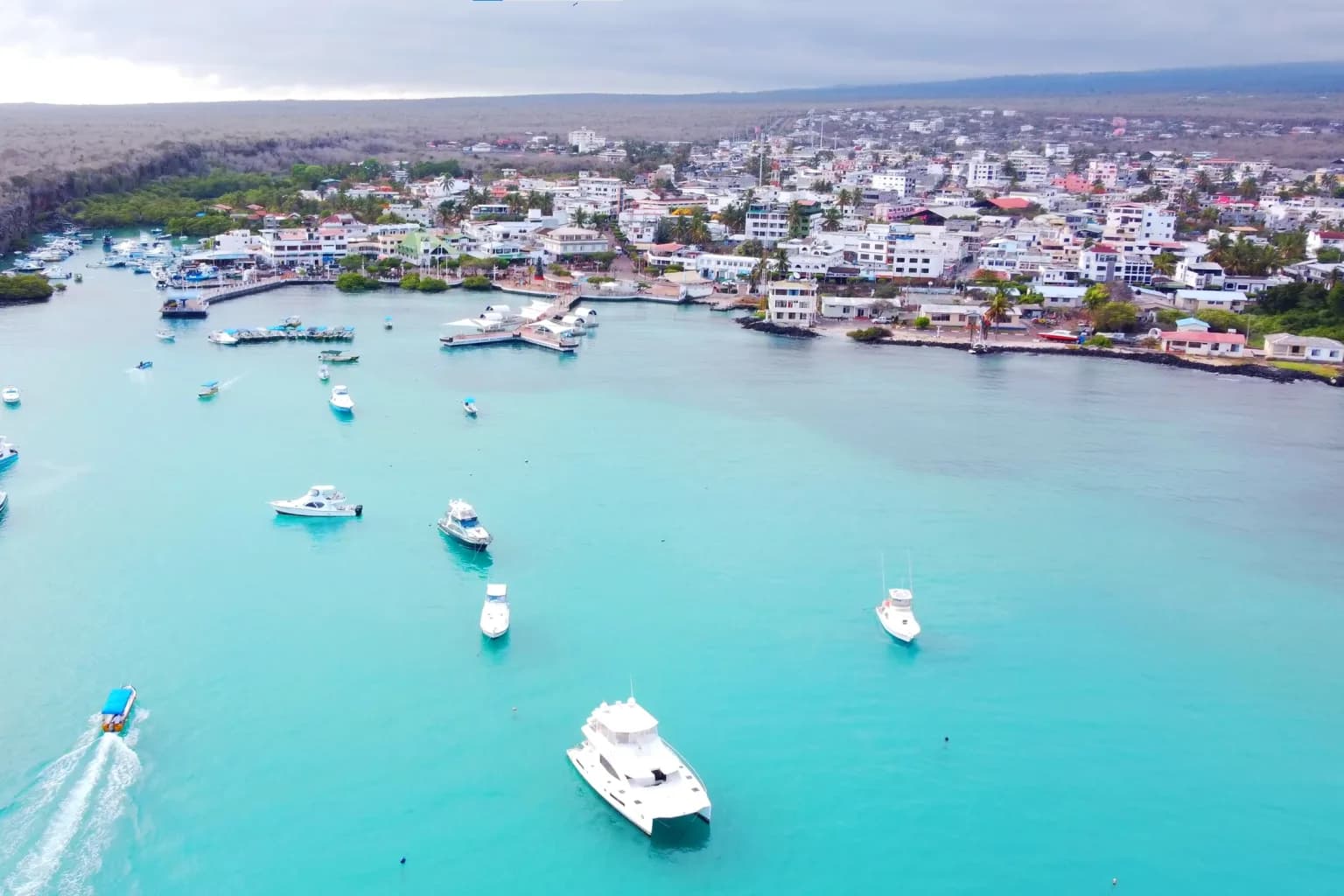
Santa Cruz
Three to four nights: a day for the town, the Darwin Station and Tortuga Bay, a half day in the highlands, and one or two boat days (Bartolomé, North Seymour, Santa Fe or Pinzón).
Island guide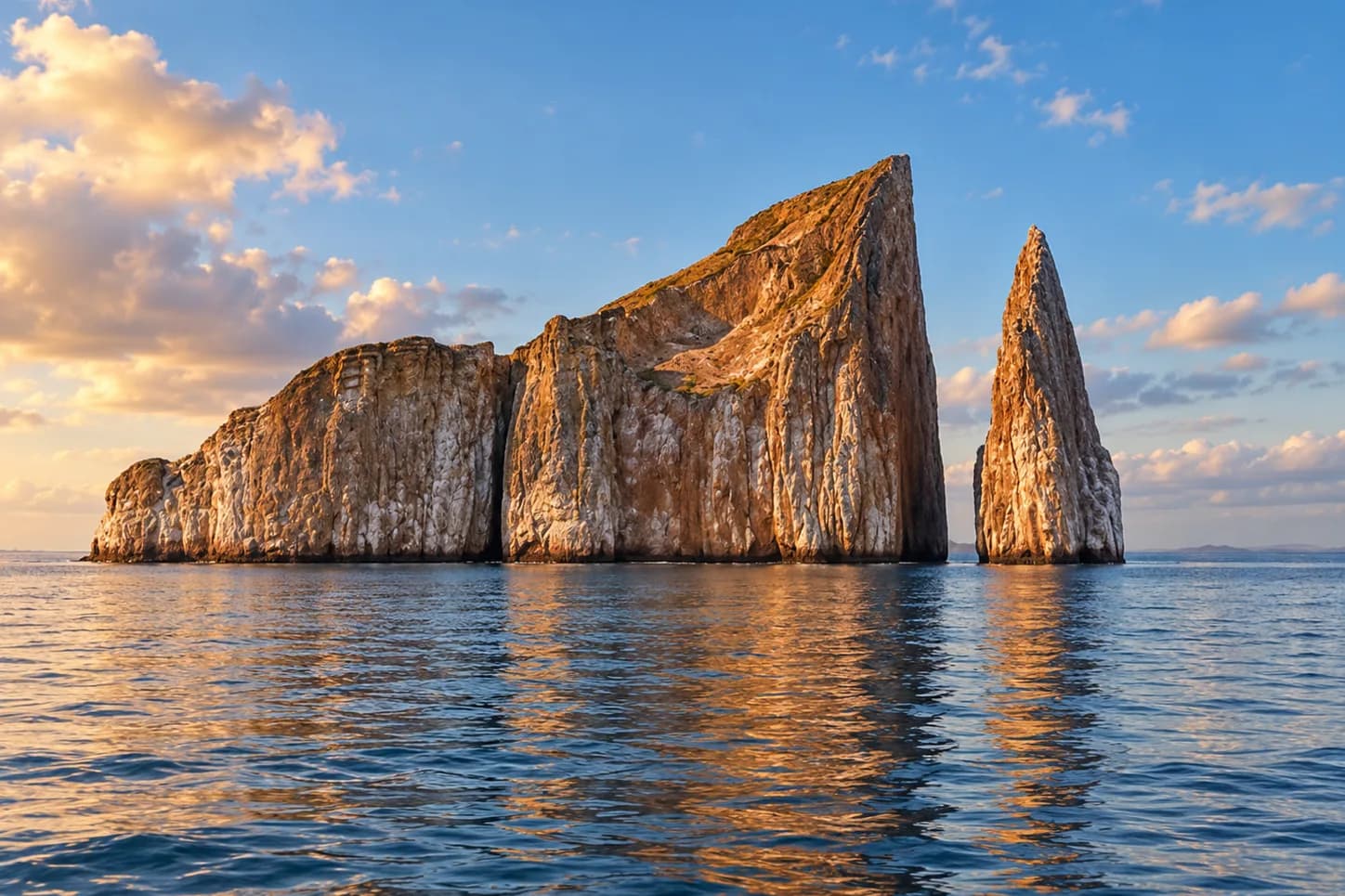
San Cristóbal
Two to three nights: a day for Kicker Rock, a day for the town, Tijeretas and the beaches, and Española or Punta Pitt if you have a third.
Island guide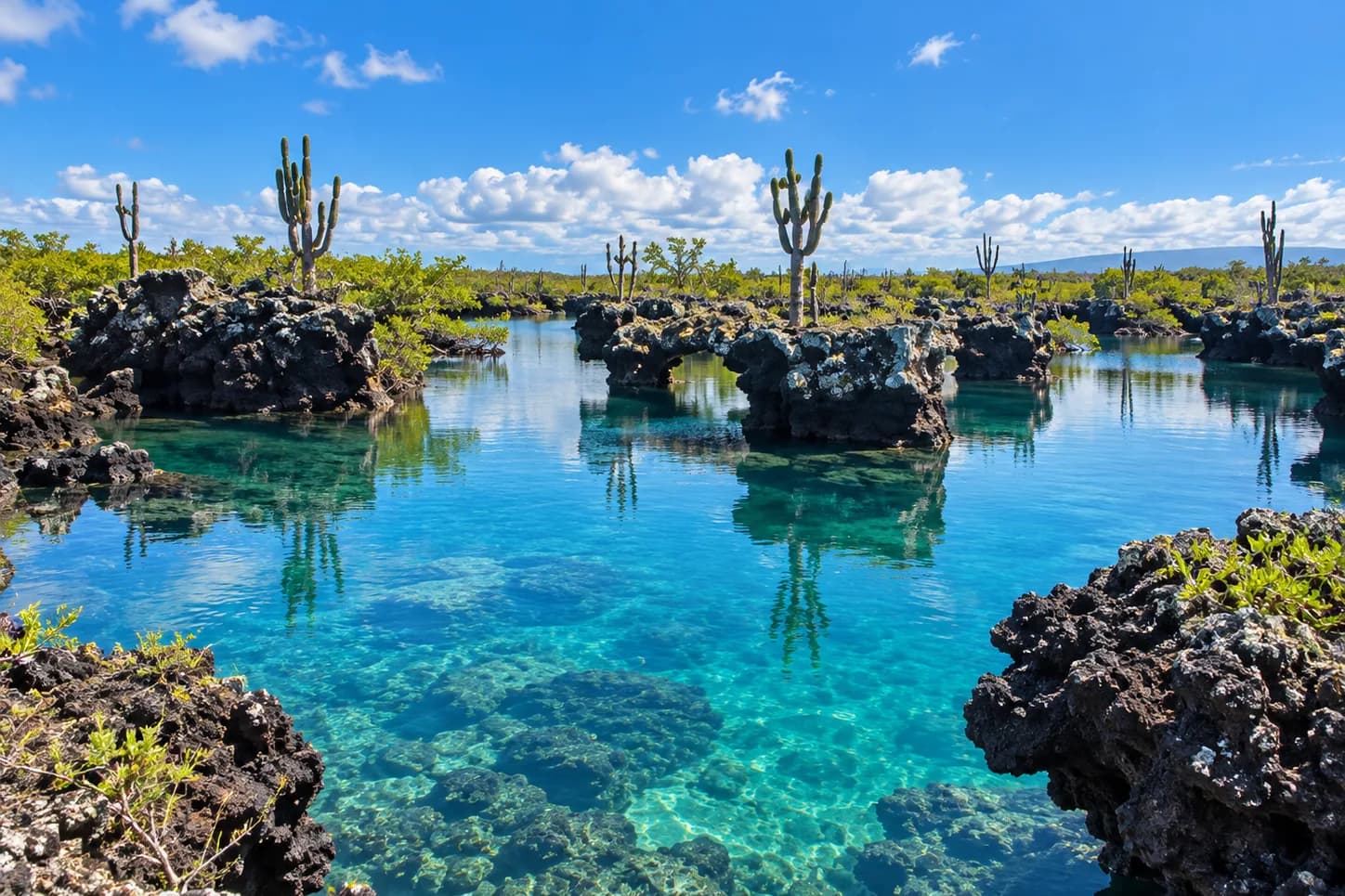
Isabela
Three nights: Los Túneles, Las Tintoreras and Sierra Negra are each a day or half day, and the ferry timetable costs you the arrival afternoon.
Island guide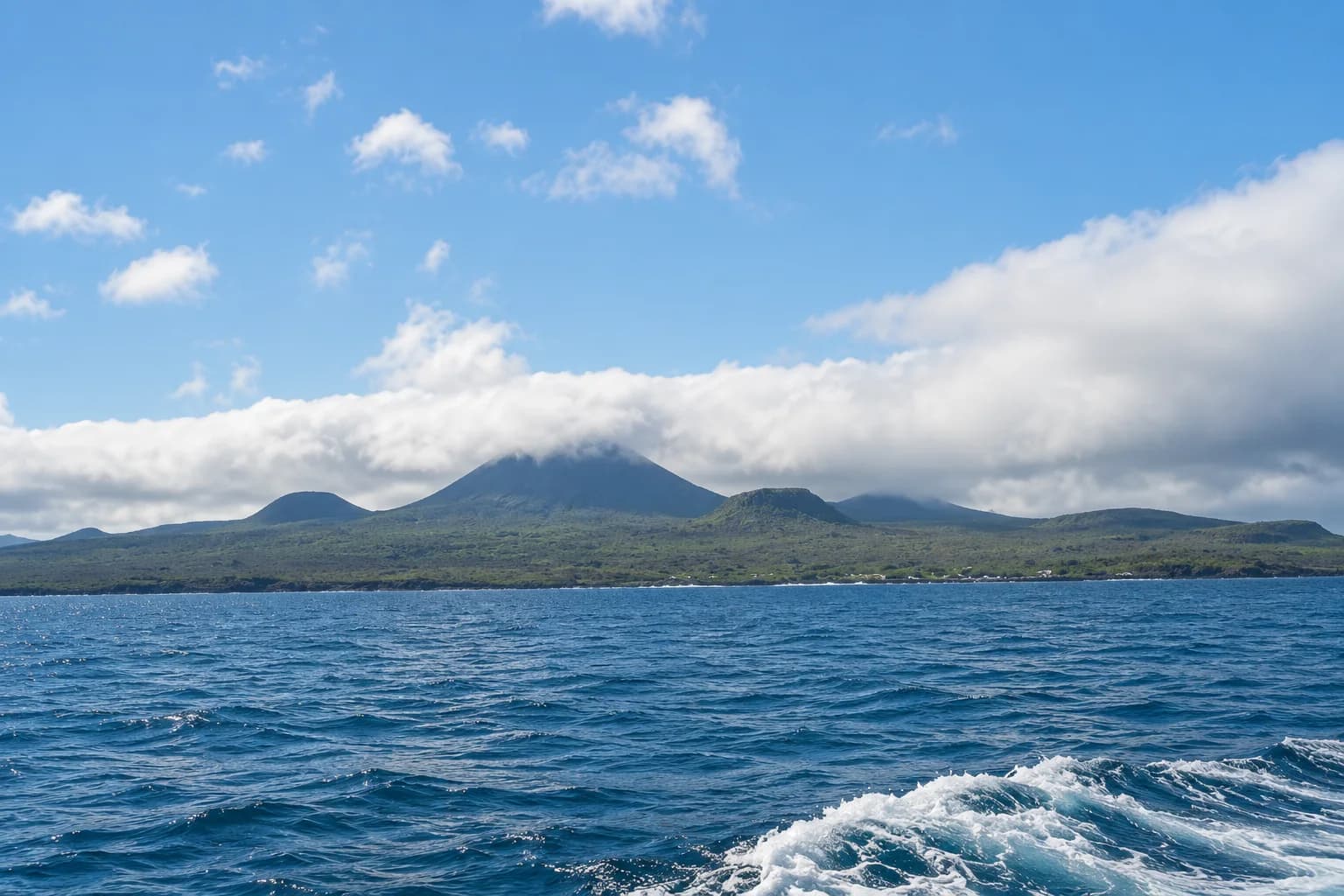
Floreana
A day tour from Santa Cruz covers the highlands, the village and a snorkel. One or two nights if you want the island to yourself once the boats leave.
Island guide
Chapter 6
Money and connectivity
Cash rules the islands. What to bring, where the ATMs are, and how your phone behaves.
- Currency
- US dollar
- Ecuador uses the dollar. Bring small bills: $1, $5, $10 and $20. Many places refuse $50 and $100 notes.
- ATMs
- Santa Cruz and San Cristóbal
- A few in Puerto Ayora and Puerto Baquerizo Moreno, sometimes empty on weekends. Isabela has one or two that cannot be relied on: arrive with the cash you need.
- Cards
- Hotels and larger restaurants
- Often with a surcharge of a few percent. Taxis, water taxis, small shops and market stalls take cash only.
- Tipping
- Appreciated, not required
- A few dollars per person for the guide and the crew after a boat day is the custom; ten percent in restaurants is generous.
- Phone and internet
- Slow but there
- Claro and Movistar cover the towns; buy a SIM or an eSIM on the mainland. Hotel Wi-Fi works for messages, not for video calls. At sea and on the trails there is nothing: download maps and tickets first.
- Electricity
- 110 V, US plugs
- Types A and B. Bring an adapter from Europe.
Chapter 7
Health, safety and packing
The sun is the real hazard. What to bring for it, and the few other things worth knowing.
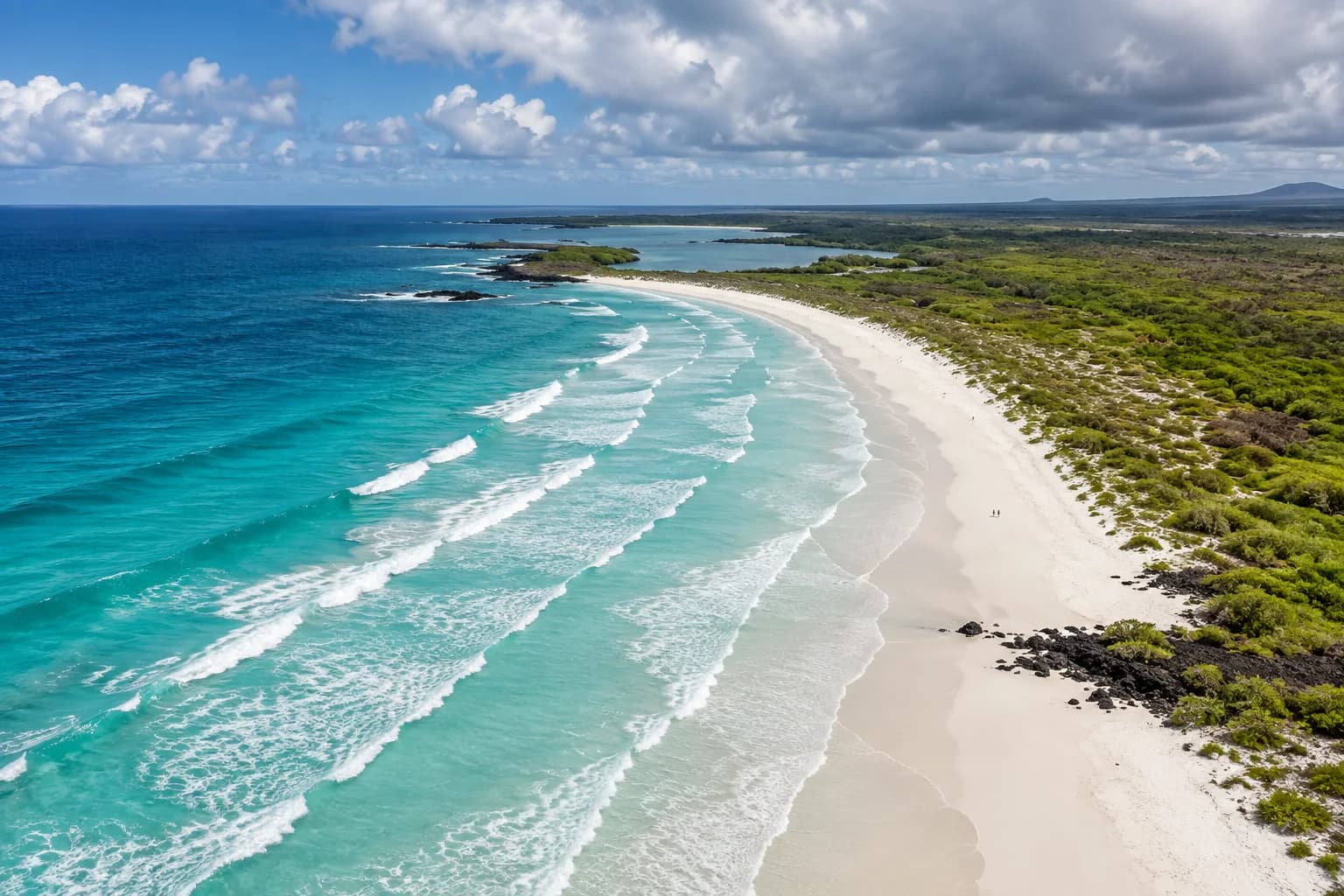
The islands are safe and healthy: no malaria, no yellow fever requirement, no altitude, and tap water you simply do not drink. What catches people out is the equatorial sun, which burns in twenty minutes even under cloud, and the sea, which is colder and rougher than the postcards suggest. Quito, if you pass through, sits at 2,850 metres: take the first day there slowly.
- Reef-safe sunscreen, SPF 50, and a hat that stays on in wind. Reapply after every swim.
- A long-sleeved rash guard for snorkelling: it beats sunscreen on your back. From June to November a wetsuit, which most tours provide.
- Water shoes or sandals with a strap for wet landings and lava rock.
- A refillable bottle: hotels and shops have filtered water. Bottled water is sold everywhere too.
- Motion-sickness tablets for the ferries and the boat days.
- A dry bag for phone and passport, a light rain jacket for the highlands, a small daypack: tours want nothing bigger.
- Travel insurance that covers evacuation. The hospitals in Puerto Ayora and Puerto Baquerizo Moreno handle the basics; anything serious flies to the mainland.
Chapter 8
On a day tour
How a boat day runs, who is on board, and what to bring.
- 1
The evening before
Snorkelling tours fit masks, fins and wetsuits at the operator's office the day before, usually between 18:00 and 20:00. That is also when you hear the exact departure time.
- 2
Early morning
Full-day tours meet at the pier or the office between 6:30 and 7:30, take a water taxi to the boat, and have one to two hours of sailing to the first site.
- 3
On the island
A licensed naturalist guide leads every visit to a protected site; groups stay together on marked trails. A wet landing means stepping off the dinghy into knee-deep water.
- 4
Back by late afternoon
Lunch is on board. Boats are back at the pier between 15:00 and 17:00, in time for a ferry the next morning or a sunset in town.
- Children
- Under 2 free, from 2 full price
- The coast guard does not count a child under two as a passenger; from the second birthday, counted on the tour date, a child takes a seat and pays like an adult.
- Your details
- Names and passports
- Every boat files a passenger list with the coast guard the day before, so a booking needs full names, passport numbers, nationalities and ages for everyone on it.
- What to bring
- Small bag
- Passport, park fee receipt, sunscreen, hat, swimwear under your clothes, a towel, water, a dry bag, a little cash for tips. The boat has the rest.
Chapter 9
Park rules
The national park covers 97 percent of the land and all the water around it. The rules are few, and they are enforced.
- Visit protected sites only with a licensed naturalist guide and an authorised operator.
- Stay on the marked trails and inside the visiting hours of each site.
- Keep at least two metres from every animal. Never touch, feed or chase one, even the ones that come to you.
- No flash when photographing wildlife. Drones need a permit that visitors do not get.
- Take nothing: no shells, sand, rocks, bones or plants.
- Bring nothing living in: no food, seeds or plants into the park, and declare what you carry between islands.
- No smoking, no fires and no camping outside the few authorised spots.
- Everything you bring leaves with you. There are no bins on the trails.
- Fishing only from licensed recreational boats; no jet skis, submarines or aerial tourism in the reserve.
Something about booking?
How bookings, payments, changes and vouchers work on this site is in the help center. The islands and their places are on the map.